S.M.A.R.T. Objectives
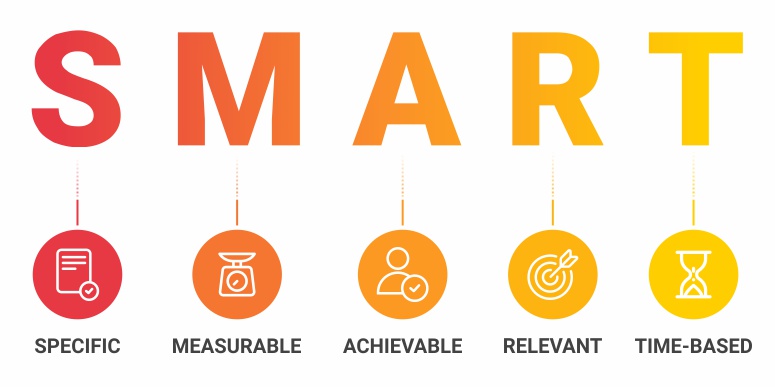
The establishment of all objectives should be created using the S.M.A.R.T. philosophy. What do we mean by a S.M.A.R.T. objective? S.M.A.R.T. is an acronym that is used to guide the development of measurable goals. Each objective should be:
Specific
Measurable w/Measurement
Achievable
Relevant
Time-Oriented
Measurable w/Measurement
Achievable
Relevant
Time-Oriented
Specific
Specific answers the questions "what is to be done?" "how will you know it is done?" and describes the results (end product) of the work to be done. The description is written in such a way that anyone reading the objective will most likely interpret it the same way. To ensure that an objective is specific is to make sure that the way it is described is observable. Observable means that somebody can see or hear (physically observe) someone doing something.
Measurable
Measurable answers the question "how will you know it meets expectations?" and defines the objective using assessable terms (quantity, quality, frequency, costs, deadlines, etc.). It refers to the extent to which something can be evaluated against some standard. An objective with a quantity measurements uses terms of amount, percentages, etc..
Achievable
Achievable answers the questions "can the person do it?" "Can the measurable objective be achieved by the person?" "Does he/she have the experience, knowledge or capability of fulfilling the expectation?" It also answers the question "Can it be done giving the time frame, opportunity and resources?" These items should be included in the SMART objective if they will be a factor in the achievement.
Relevant
Relevant answers the questions, "should it be done?", "why?" and "what will be the impact?" Is the objective aligned with the S/C/D’s implementation plan and the university’s strategic plan?
Time-oriented
Time-oriented answers the question, "when will it be done?" It refers to the fact that an objective has end points and check points built into it. Sometimes a task may only have an end point or due date. Sometimes that end point or due date is the actual end of the task, or sometimes the end point of one task is the start point of another.
Комментарии
Отправить комментарий